Red, White, and Blue: The Bold Font for Patriotic Designs
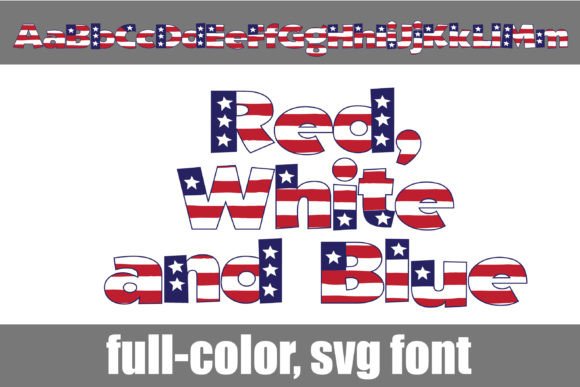
There’s something undeniably powerful about a design that feels both celebratory and confident. When a project calls for a touch of national pride, seasonal flair, or simply a bold, graphic statement, the typography you choose becomes the centerpiece. The Red, White, and Blue font is a striking example of a typeface built for exactly these moments—a full-color, bulky sans serif that commands attention while delivering a clear, patriotic message.
A Typeface with Built-In Character
What sets this font apart immediately is its color. Unlike traditional single-color typefaces, Red, White, and Blue arrives as a complete color palette—vibrant reds, crisp whites, and deep blues are integral to each letterform. This isn’t a font you need to manually color in; the design is baked right in. The bulky sans serif construction gives it a sturdy, approachable feel, perfect for headlines that need to be read quickly and from a distance. It’s a modern take on classic Americana, blending clean lines with a celebratory spirit.
But the versatility goes further. The font includes an alternate case with additional color variations. You can access these through your system’s character map or, if you’re using Silhouette Studio, through its glyph map. This allows for creative mixing and matching—perhaps using the primary red-white-blue for a main headline and an alternate gold or green version for supporting text or accents. It’s a thoughtful feature that expands the font’s utility across different themes and projects.
Where This Font Truly Shines
The practical applications for a font like this are wide-ranging, especially for anyone working on projects tied to holidays, events, or brands with a patriotic angle. Think beyond the obvious Fourth of July poster. Consider how its bold presence could work for:
- Branding & Logo Design: For businesses or organizations with a distinctly American identity—think vintage shops, local breweries, event planning companies, or community groups—this font can anchor a logo or brand mark with instant recognition.
- Packaging & Merchandise: Imagine product labels for specialty foods, craft goods, or seasonal items. The built-in color eliminates a step in the design process, ensuring consistency across batches. It’s equally effective for t-shirts, hats, tote bags, and stickers.
- Print & Digital Marketing: From flyers and posters promoting a summer sale or a community parade to email headers and social media graphics, the font grabs attention in busy feeds. Its readability at larger sizes makes it ideal for digital ads and website banners.
- Events & Invitations: Wedding invitations for a July 4th ceremony, party invites for a veteran’s celebration, or program covers for a patriotic concert—the font sets the tone immediately and memorably.
- Editorial & Digital Products: Use it for chapter titles in a cookbook celebrating American regional cuisine, as headers in a blog about U.S. travel, or as a standout typeface in a digital planner or printable art.
Working with Color Fonts: Practical Insights
It’s important to understand how color fonts work to get the most out of them. Red, White, and Blue is an OpenType full-color (SVG) font. This means the color information is stored within the font file itself. Installation is straightforward—you install it just like any standard .OTF font, using FontBook on a Mac or a font manager/Control Panel on Windows.
However, compatibility is key. Not every design program supports color fonts. In unsupported software, the font will appear as a solid black outline. Even in programs that do support them, like Adobe Illustrator, Photoshop, Silhouette Studio, QuarkXPress, or Inkscape, the color often doesn’t show in the font preview window. You’ll know it’s working correctly when you type on your canvas and see the full-color letters render. Always test your font in your specific software before committing to a large project.
This characteristic also influences pairing. Because the font is so visually dominant with its color and bulk, it works best as a display font for headlines, titles, and short bursts of text. Pairing it with a simple, neutral sans serif or a clean serif font for body copy creates balance and ensures readability. For example, a website header in Red, White, and Blue could be supported by paragraphs in a font like Open Sans or Lora. This contrast allows the decorative font to make its statement without overwhelming the viewer.
Elevating Your Visual Communication
Choosing the right typeface is a fundamental part of visual communication. A font like Red, White, and Blue does more than spell out words; it conveys a specific emotion and context. It can enhance brand recognition by tying a business to a set of values—patriotism, celebration, tradition, or boldness. It improves visual consistency when used strategically across a campaign, ensuring all materials feel unified. Its inherent design also contributes to a professional presentation, showing attention to detail and a cohesive creative vision.
For small business owners and content creators, this translates to stronger audience engagement. A social media post using this font for a relevant holiday or event is more likely to stop the scroll. A product label that uses it effectively can stand out on a shelf or in an online marketplace. It’s a premium font asset that serves a specific, powerful purpose in your design toolkit.
Making It Work for Your Project
Before diving in, take a moment to review the included font styles and alternate characters. Understanding the full glyph set allows you to plan your design more effectively. Consider the commercial licensing—if you plan to use the font for client work or products you sell, ensure your license covers that use. This is standard practice for any commercial font and protects both you and the font creator.
Ultimately, the best way to know if a font is right is to experiment. Try it on a mock-up of your project. See how it pairs with your other chosen fonts. Check its legibility at the sizes you’ll be using. Does it capture the feeling you’re after? Does it serve the project’s goals? When a typeface aligns with the message and the medium, it becomes more than just letters—it becomes a vital part of the story you’re telling.